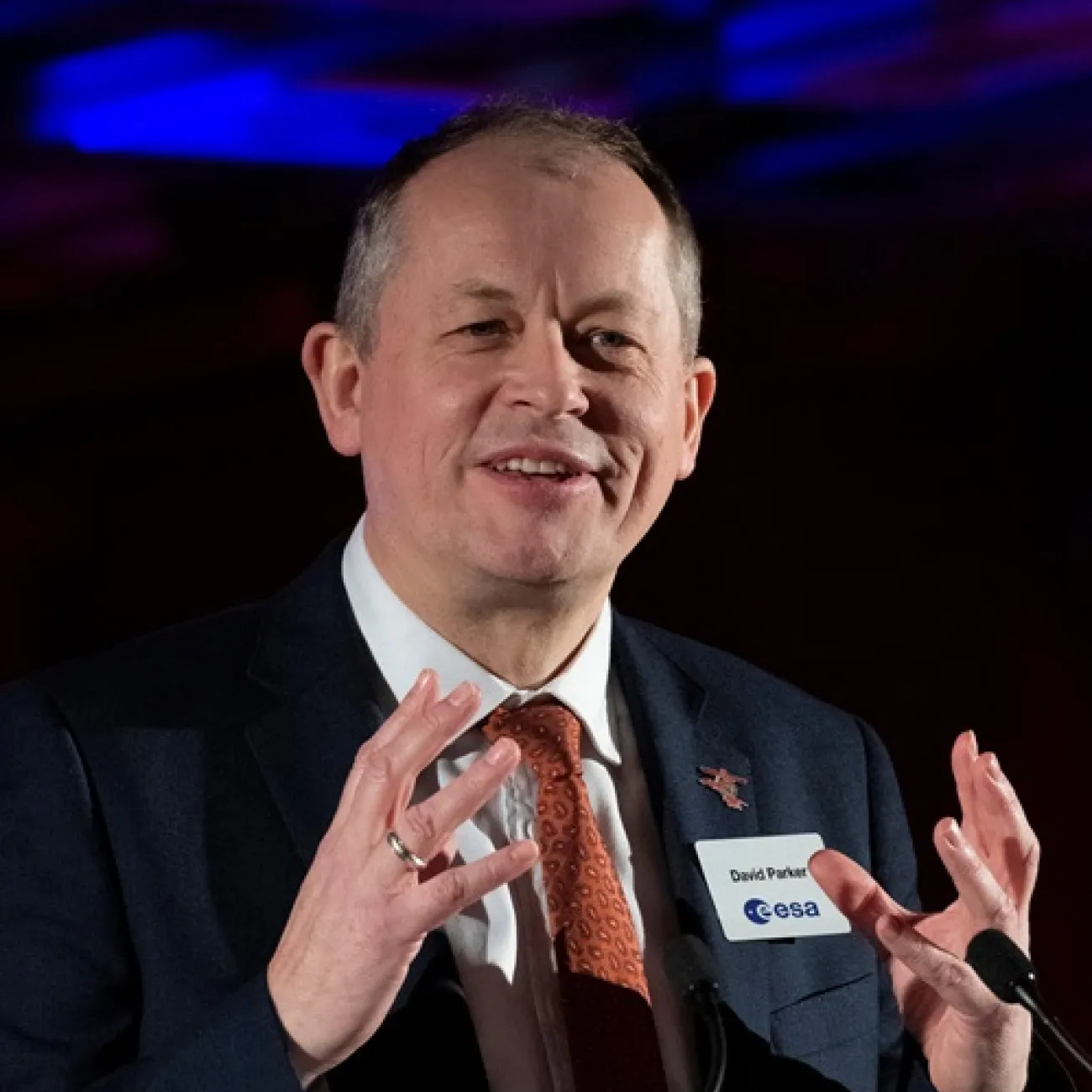
Over a thirty-five year career in industry, the public sector and international space management, David Parker has become one of the UK's leading space programme and policy experts.
Initially working in engineering roles in British Aerospace Space Systems on the Cluster and Envisat missions and studying new astrophysics and planetary missions such as XMM, Herschel and Rosetta, he later moved into line management as the Head of GNC at MMS-UK in Bristol, UK. Following a two year secondment to the British National Space Centre (1997-99) as the Assistant Director of Industrial Sponsorship, he returned to industry at Astrium, Stevenage responsible for institutional business development in space science across the company's three countries. He led the successful bid teams for projects such as Aeolus, LISA Pathfinder and the ExoMars rover and helped establish the space science group known as SPAN.
Having joined the research councils in 2004 to lead their European Space Agency science and exploration programmes, he subsequently helped create the UK Space Agency in 2010, becoming Director of Technology, Science and Exploraton before being appointed its Chief Executive in 2013. He negotiated the establishment of the first ESA centre in the UK, which became ECSAT at Harwell; established a national cubesat programme (UKube-1); the National Space Technology Programme; and the education programme supporting Tim Peake's Principia mission to the International Space Station in 2015-16.
As Director of Human and Robotic Exploration at the European Space Agency (2016-23), he created Europe's multi-billion space exploration programme, E3P- Terrae Novae, and managed contributions to the ISS, lunar exploration (including ESA's role in Artemis) and Mars exploration. He helped select the latest set of European astronauts including the first astronaut candidate with a physical disability, John McFall.
He holds a BSc in Aeronautics and Astronautics from the University of Southampton and a PhD in aeronautical testing technologies sponsored by NASA's Langley Research Center. He was the 2019 recipient of the Royal Aeronautical Society's Geoffrey Pardoe Award for long and valued service to the space sector and was the 2024 UK Space and Satellite Personality of the Year.